A Loaded Shotgun in the Closet
“Do It Yourself” and “When the Pin Hits the Shell” reckon with death by suicide.
 Nancy Einhart
One of my favorite things about writing Mundane Mayhem is that I gain new appreciation for songs that never quite clicked with me before. "When the Pin Hits the Shell" has always been one of my favorites, but I'm newly obsessed with "Do It Yourself." If this newsletter has clicked with you, subscribe by hitting the button below and/or forward this email to your friends!
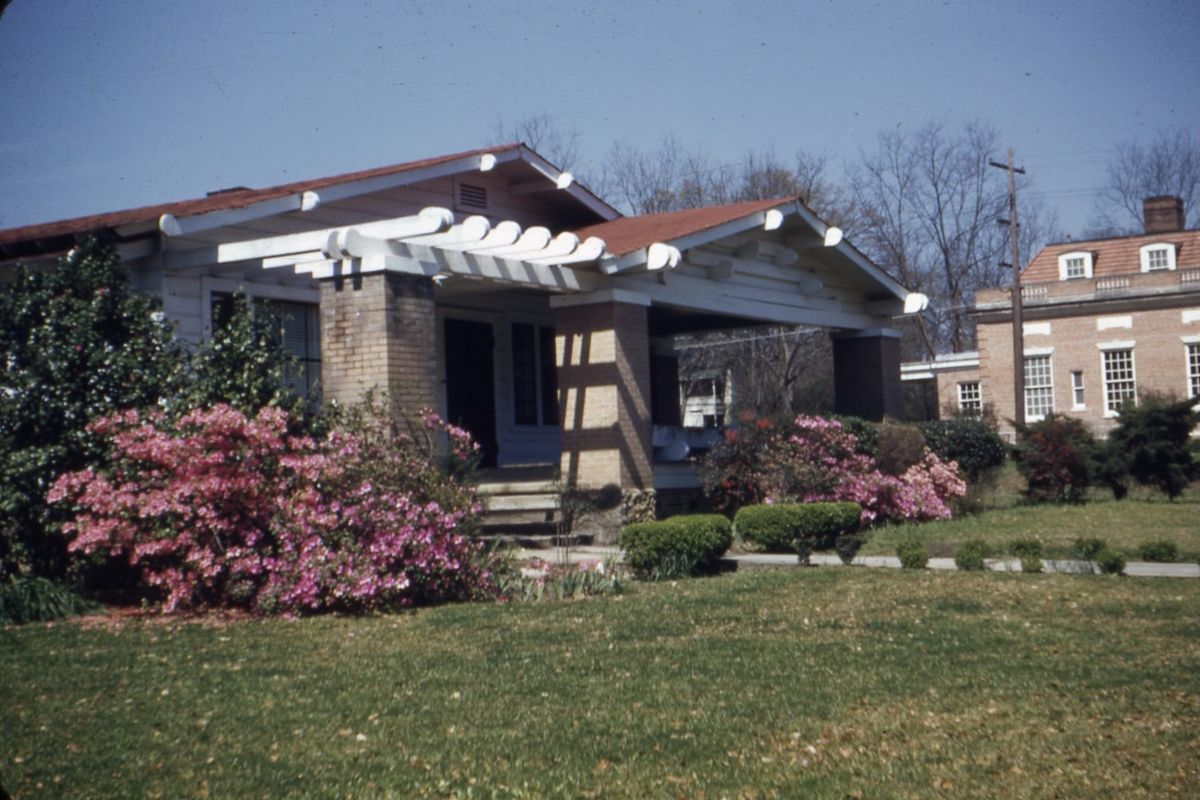
In 1963, my great-grandfather took off his sock and fired his shotgun — at home, in a closet, on his wife’s birthday.
My mom was 14 or 15, and she still remembers the red printed shirtdress she was wearing that day. She remembers hearing adults say “he took his sock off” — the way folks talk when they think kids aren’t listening — implying that he used his toe to pull the trigger. My own grandfather, who died from lung cancer in 2006, maintained into his old age that his dad didn’t kill himself on purpose. Must have been an accident. He wouldn’t have done it on her birthday.
My great-grandfather, Joe Miles, died by his hand in the town where my mom grew up and where I spent a lot of my childhood. Lumberton, Mississippi, was in a dry county and had about 2,000 residents in its boom times. When I was a kid, the one stoplight became a four-way stop, presumably due to a lack of traffic. As the name would suggest, Lumberton was a sawmill town, and my great-grandfather was a sawmill man — although the town name preceded him.
“Do It Yourself” and “When the Pin Hits the Shell” both address their departed friend directly, with each songwriter attempting to reconcile his death alongside their own demons.
Joe Miles founded his sawmill in 1934, starting with what they called a peckerwood mill — a small, portable sawmill that couldn't cut wood faster than a woodpecker. (I don’t love using the word “peckerwood,” which has been co-opted by white-power prison gangs, but the sawmill usage is historically accurate.) Running a sawmill requires a high tolerance for risk and danger, and Joe had his vices: he gambled, smoked, and drank. My grandfather remembered waiting in the car while his dad visited his mistress.
By age 71, Joe was depressed and sick with type 2 diabetes, a once-robust man who had lost his livelihood. Like my mom says, 71 was a lot older then than it is now. His sons took over the sawmill, he couldn’t drive anymore, and I guess his life just felt too lonely. He did not leave a note.
 Nancy Einhart
I wasn’t personally traumatized by his death — if no one talks about it, is it even generational trauma? — but people in my family and their community were deeply affected. When someone dies by suicide, the living are left trying to understand what happened. My grandfather chose to never discuss it. Drive-By Truckers, on the other hand, faced the aftermath by writing songs: Patterson Hood’s “Do It Yourself” and Mike Cooley’s “When the Pin Hits the Shell.”
Patterson’s song roars with anger and resentment, with vocal harmonies that sound like shouting into a void, while Mike Cooley’s contribution feels resigned and mournful.
Although Patterson and Cooley wrote their songs in isolation, both are reactions to the death by suicide of friend and former bandmate John Cahoon. Patterson’s song roars with anger and resentment, with vocal harmonies that sound like shouting into a void, while Mike Cooley’s contribution feels resigned and mournful. Taken together, they uncannily capture how it feels to lose a loved one to self-annihilation or self-destruction.
Decoration Day, the first Drive-By Truckers album I ever owned, is a dark chronicle of loss, heartbreak, and mourning. Hell, one of the more upbeat songs is called “Hell No, I Ain’t Happy” — which DBT performed this week on Colbert. “(Something's Got to) Give Pretty Soon” and “Your Daddy Hates Me” remain two of the greatest divorce songs ever written. “Careless” grapples with the accidental demise of Chris Quillen, who was supposed to be in DBT before dying in a car crash, and “Loaded Gun in the Closet” tells the story of a gun that stayed put.
“Do It Yourself” and “When the Pin Hits the Shell” both address their departed friend directly, with each songwriter attempting to reconcile his death alongside their own demons. They grope in the dark for understanding, to find common ground. Remarkably, both songs have verses that acknowledge how depression can creep in wherever it finds an opening:
“Everyone has those times when the night's so long
The dead-end life just stares you down
You lean back under the microphone
and turn your demons into walls of goddamned noise and sound.”
— From “Do It Yourself”
“Me and you, we liked our pills and our whiskey.
But you don't want your head full of either one when the house gets quiet and dark.”
— From “When the Pin Hits the Shell”
The lyrics within swing from condemnation (“you'd rather die than let anyone help”) to empathy (“having fun used to be so damned easy”) — but ultimately refuse to offer forgiveness:
“Some say I should cut you slack
but you worked so hard at unhappiness.”
— From “Do It Yourself”
“If you was my brother, man, I'd probably stand by you
but you ain't, man, so I got to go my way.”
— From “When the Pin Hits the Shell”
One verse in “When the Pin Hits the Shell” has always hit me the hardest. Not necessarily because of my great-grandfather, though the lyrics about loneliness, fatherhood, and shame feel very relevant:
“Take a trip down memory lane, you don't see no friendly faces
all the houses have been painted and nobody knows your name.
It's enough to make a man not want to be nobody's Daddy,
when all he thinks he's got left to hand down is guilt and shame.”
In the end, this duology isn’t just about suicide; it’s also about survival, with Hood and Cooley laying out their own individual strategies for fending off the darkness. They lived to tell about it. And if you’re listening, so did you.
One more thing: I would be a terrible granddaughter if I didn’t add that my grandfather — his strong capacity for denial notwithstanding — was a great guy, and I loved him very much. When he was buried, in a pine box, I wrote his obituary, which I have never had an excuse to link to before, so here it is.