Sportswriter Wright Thompson on DBT and the Dead: “Live Music Is My Medicine”
Wright Thompson talks about what Taylor Swift has in common with the Grateful Dead and what it means to be an active citizen of the South.
Mundane Mayhem is a reader-supported publication, so please consider supporting my work by becoming a paid subscriber. Subscribe below or forward this email to your friends!
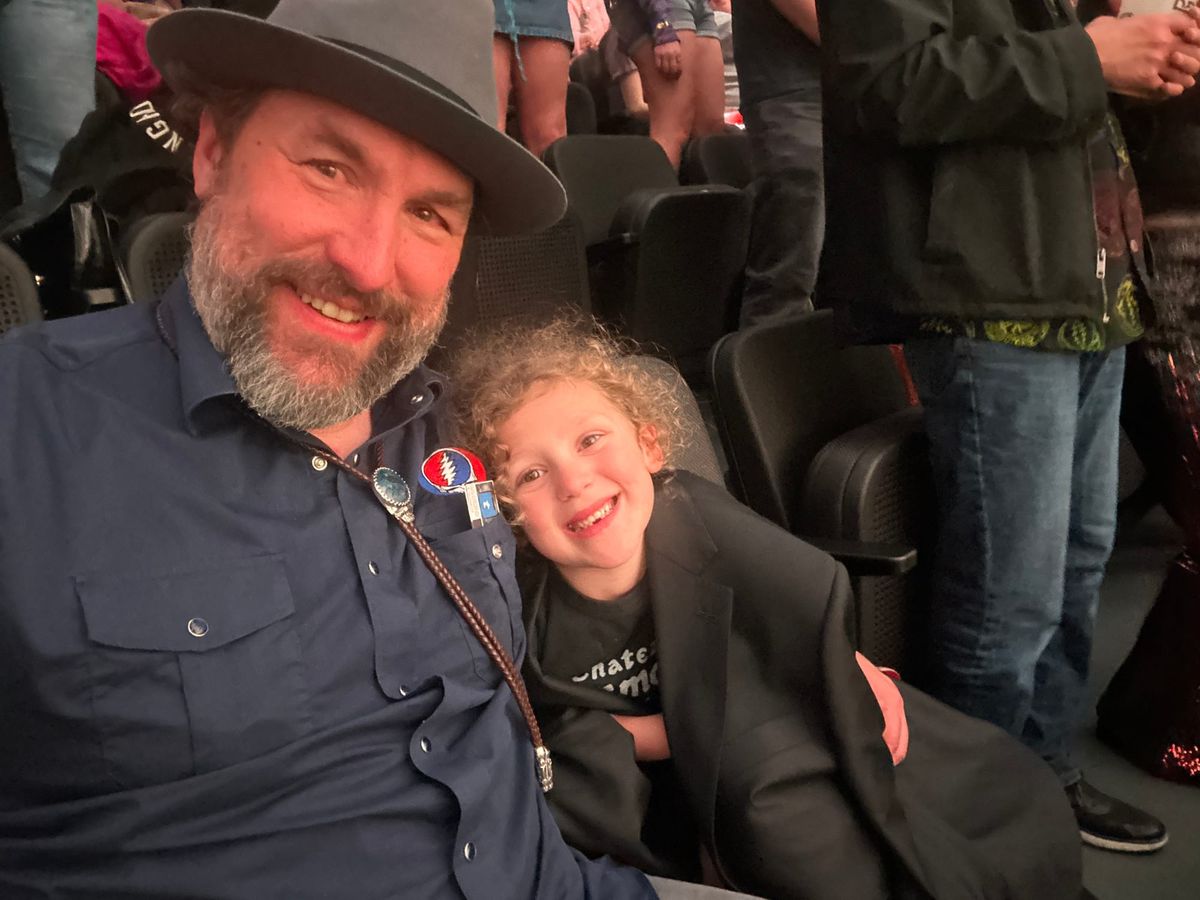
When Bob Weir died on January 10, the Deadheads among Drive-By Truckers fans made ourselves known. Within the intersection of our sonic Venn diagram sits Wright Thompson, a senior writer for ESPN and author of three New York Times bestsellers. Wright counts Jason Isbell and Drive-By Truckers among his favorite musicians, but “I am first and foremost a serious, addled Deadhead,” he says. He estimates he went to 18 Dead and Co. shows at The Sphere.
In cosmic timing, I spoke with Wright four days before Bob died. The writer had just landed in San Francisco, birthplace of the Grateful Dead. Like touring bands, sportswriters spend a lot of time on the road, but Wright — who grew up in Clarksdale, MS, and lives in Oxford — has spent much of his career chronicling the South.
His 2024 book, The Barn: The Secret History of a Murder in Mississippi, was hands down the best thing I read last year. The Barn changed my perspective on the murder of Emmett Till and the entire history of Mississippi; it should be required reading for Southerners. He’s also executive producer of TrueSouth, a food and culture documentary series hosted by John T. Edge.
I suspected he might be a DBT fan when I saw the title of his 2019 book, The Cost of These Dreams: Sports Stories and Other Serious Business, which borrows a phrase from the Patterson Hood song “Angels and Fuselage.”
“I’ve been a fan for a very long time,” Wright says. “That line and that song stuck with me. I loved that line before there was even going to be a book.”
A self-described “professional enthusiast,” Wright says that music played an essential role in shaping who he became. Keep reading for our full conversation about how sports fandom differs from band fandom, what Taylor Swift has in common with the Grateful Dead, and what Wright says it means to be “active citizens of the South.”
How did you discover the Drive-By Truckers? Is there a particular song that first resonated with you?
Wright Thompson: “Let There Be Rock,” like everybody else. I go way back, through many, many iterations. I know Patterson, and he just couldn’t be a nicer guy. He’s everything you hope he would be. In readings for The Barn, I bet I quote Patterson Hood’s “the duality of the Southern thing” every night.
All of them — but particularly Patterson — belong in a Mount Rushmore of Southern ethical thought leaders, right alongside Will Campbell and Thomas Merton.
Do you feel like you have a responsibility on your shoulders, as a creative liberal person from Mississippi?
WT: I think if I allowed myself to go down that road, I would be utterly and totally paralyzed. The gulf between me and Patterson Hood is tremendous. It’s the Gulf of Mexico, not the Gulf of America, but it remains tremendous. Patterson, Jason, Mike Cooley — they are doing something on an incredibly high level that is humbling to watch.
All of them — but particularly Patterson — belong in a Mount Rushmore of Southern ethical thought leaders, right alongside Will Campbell and Thomas Merton.
I think we are all active citizens of the South, and I say that knowing where Patterson lives. We’re all engaged very much in what it means to be from there and to raise up another generation of people who will have roots there.
In The Barn, you mentioned Willie Morris’s North Toward Home, which showed you it was possible “both to love and hate a place.” I think that’s how a lot of us from the South feel.
WT: Willie Morris is the Drive-by Truckers. If Willie Morris’s literature was distilled into 2 minutes and 50 seconds, it would be a Drive-By Truckers song.
How did music shape your own evolution and education?
WT: The most important thing that’s ever happened to me in my entire life was when a counselor at Alpine Camp For Boys introduced me to the Grateful Dead when I was 14 or 15. The collecting of tapes was such an instrument of vicarious travel, imagining these far-off places, the ritual of writing out the names: The Nassau Coliseum. The Greek Theatre. Autzen Stadium.
If Willie Morris’s literature was distilled into 2 minutes and 50 seconds, it would be a Drive-By Truckers song.
The cosmic dystopian cowboy sensibility of the Grateful Dead's music — and the fact that they're such a quintessentially American band — demands that you go out and discover the American roadside and what lays around it and on it. All of us who either went to follow Phish or the Grateful Dead were chasing Kerouac as much as we were Jerry Garcia and chasing the American road as much as a concert.
One advantage the Grateful Dead have is that they have songs that have quotes in high school yearbooks. It’s very much country music. The Grateful Dead is closer to Hank Williams than Pink Floyd to me.
How is sports fandom similar or different from being a fan of a band?
WT: Nobody loses a Dead show. Imagine if you bought a ticket, and the band only played 50% of the time. The collective tribalism of a sporting event is divided into two sides, and the stadiums, which are often the same venues, have a very different energy. I bet if you hooked me up to some sort of brain scan, a sporting event triggers “fight or flight.” It activates your warrior brain in a way that a concert doesn’t.
It’s very much country music. The Grateful Dead is closer to Hank Williams than Pink Floyd to me.
Live music is my medicine. It’s not only my favorite thing in the world to do, but I would argue that it’s psychologically very important. I bet if you put me in that same brain scan machine, live music would light up a lot of the same places as church. It feels like prehistory, pre-literature — like it's activating really, really old forces.
I’ve been to a ton of Dead shows, a ton of Widespread Panic shows, and I have never, ever seen Phish. It’s not a weird stand that I’m making, it’s just that I was going to Panic when people were going to Phish in the ’90s. I’m gonna go see Phish at some point. I have a bunch of people who are dying to be the person who takes me.
You are clearly very passionate about music. Any reason you chose sportswriting instead?
I wanted to be a music writer. I was randomly assigned to the sports section at the college newspaper — no joke. One of the reasons I think I’m good at sportswriting is I’m much more of a music fan than a sports fan. I have a degree of curiosity and I don’t carry a lot of biases into the room, where I do with music.
Anything you’ve listened to lately that you’d recommend to other DBT fans?
WT: I like MJ Lenderman, though maybe that’s more Isbell-y. There’s a band I love right now called The Great Dying. For about two years, I’ve been way, way down a Billy Strings rabbithole and I’m a big fan. I love Panic still, but I missed those New Year’s shows where Billy Strings played with them — I went to see Ole Miss play in the Sugar Bowl instead.
Are you still involved in the TrueSouth series?
WT: Yep, we are in the middle of filming season 9, and it’s my favorite thing I do. It’s collaborative, and everything else is sort of me, alone. I think we are doing something that’s good and smart and entertaining, and I’m really proud of it and the group of people I make it with. John T. Edge is like an older brother to me; the show is the tax we pay to get to work together.
All of us who either went to follow Phish or the Grateful Dead were chasing Kerouac as much as we were Jerry Garcia and chasing the American road as much as a concert.
We have a golf show coming out in April, called “Where It Lies.” Every episode is set at a different public course. One of the guys I’m making it with is my fellow Drive By-Truckers/Jason Isbell devotee Kevin Van Valkenburg.
Are there any other bands you never got to see live and wish you had?
WT: I turned down a couple of opportunities to see Tom Petty, because I just thought he'd be there forever. And some guys I went to high school with went up to Memphis to see Nirvana at the New Daisy Theater. I wish I’d seen Pink Floyd — no one ever will. But I’ve seen a lot of good bands.
People forget that the Grateful Dead was Taylor Swift.
I went to two of the Eras tour shows. I have a 5- and a 7-year-old. The parasocial vibe of a Taylor Swift show is the closest thing I've ever seen to a Grateful Dead show. It’s unbelievable. It’s very insular even though it’s massively popular, which is a trick.
People forget that the Grateful Dead was Taylor Swift. They were, from ‘86 to ‘95, the biggest touring band in the world. Not culty and not critics’ darling, I mean tickets sold, butts in seats. They were massively popular. They were playing football stadiums, the same venues that Taylor Swift’s playing. This wasn’t your older brother’s secret. When something can feel counterculture while also being mass popular culture, that's really interesting. ●
Jerry Garcia once said of Deadheads, “Our audience is like people who like licorice. Not everybody likes licorice, but the people who like licorice really like licorice.” The same could be said of Drive-By Truckers fans.
The subculture spawned by the Grateful Dead showed us that there is comfort in fandom, in moving among humans who are moved by the same songs we are. As Wright Thompson puts it, “There’s some sort of mystic, ancient connection between the people on stage and the people in the crowd.” The musicians enable us to create communities around them — Deadheads, Heathens, Swifties — and join in a collective harmony that feels transcendent.
Watch Wright Thompson’s obituary for Bob Weir and follow him on Instagram while you’re there. Buy one or all of his books below: