Bow to the River and Pray
Hearing Drive-By Truckers and Jason Isbell perform on their home turf at ShoalsFest felt significant, thanks in part to the deep sense of place present in both acts’ music.
This post is free to read, but if you enjoy Mundane Mayhem, forward this email to your friends and please consider becoming a paid subscriber or leaving me a tip!
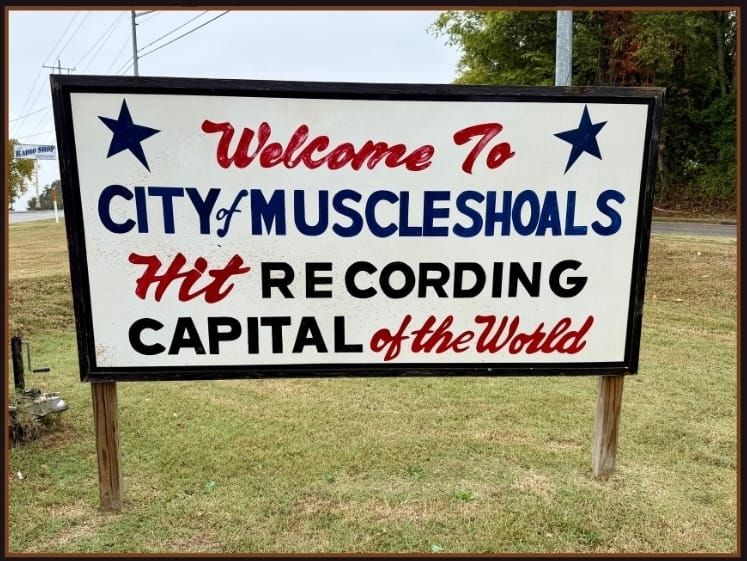
When you’re in Muscle Shoals, it’s tempting to hypothesize how this little corner of north Alabama produced so much legendary music. Maybe Muscle Shoals sits at the perfect geographic intersection of hillbilly and Black music. Maybe the homegrown talent — W.C. Handy, Percy Sledge, Donna Jean Godchaux, and David Hood (aka Patterson’s dad) — made this musical alchemy inevitable. Maybe it’s something spiritual: In the Muscle Shoals documentary, Tom Hendrix, a descendent of the native Yuchi people, explains that his ancestors called the nearby Tennessee River “the river that sings.”
 Nancy Einhart

After my trip to north Alabama, I decided it’s better not to attempt to explain it. Like how food tastes better in its native terroir, some combination of land, water, atmosphere, and humans came together to create something special. This cluster of unremarkable towns on the Tennessee River birthed two legendary music studios, a group of session musicians who soundtracked decades’ worth of hits, and Drive-By Truckers and Jason Isbell.
When I bought tickets to ShoalsFest — held Oct. 3 and 4 in McFarland Park in Florence, AL — I was motivated mostly by the Isbell and DBT reunion, plus the fact that this supergroup was playing one of my favorite albums, Decoration Day, in its entirety. (You can enter to win The Definitive Decoration Day, plus two more albums, in my DBT vinyl giveaway!) As someone who was born in Mobile and grew up in “lower Alabama” (aka Pensacola, FL), I didn’t feel eager to explore another part of Alabama.
 Nancy Einhart
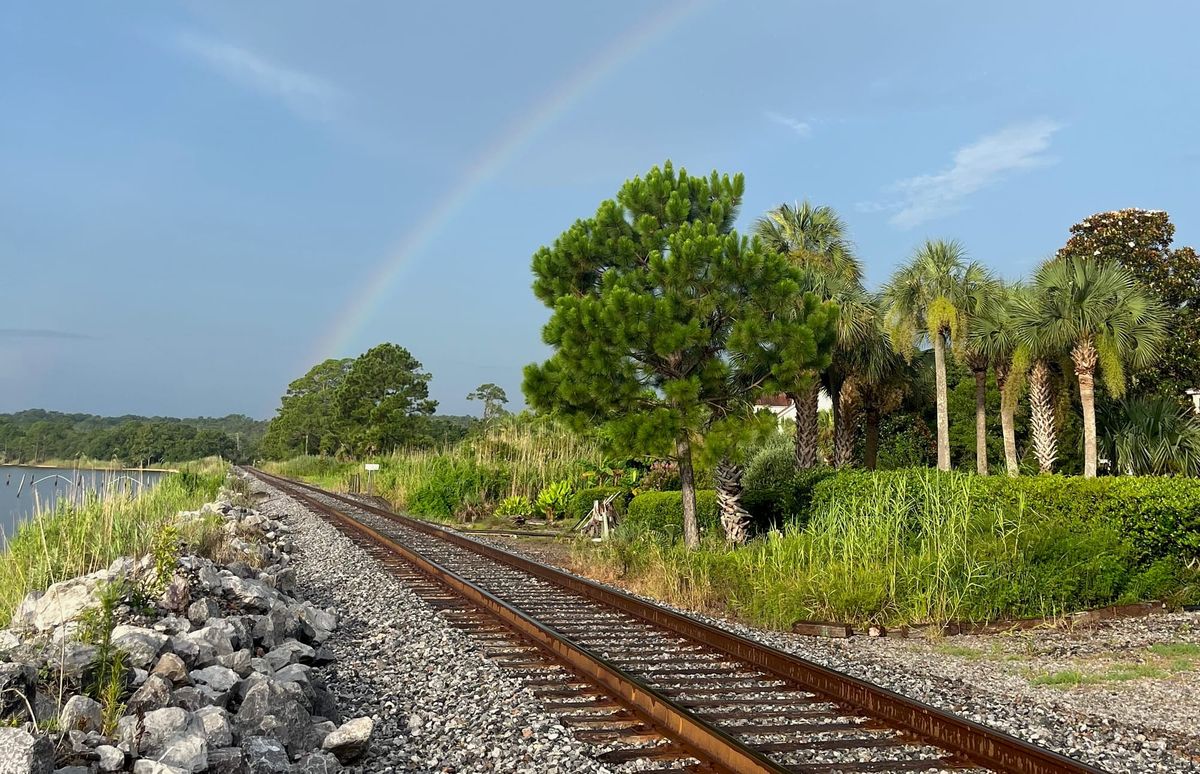
But like eating a po’boy in New Orleans or drinking a cappuccino in Rome, hearing Drive-By Truckers and Jason Isbell perform on their home turf felt significant, thanks in part to the deep sense of place present in both acts’ music Driving around the region felt like playing DBT and Isbell bingo, with signs for Highway 72, the Tennessee River, and Zip City.
“I feel really lucky to be down here in this center of a music world that I'm so in love with. This is it. This is the jumping off point.”
I met up with Jessica Xinos, a Drive-By Truckers fan from Virginia, on Friday afternoon at ShoalsFest. Not only was this her first time at the festival, it was her first time in Alabama, and she felt surrounded on all sides by DBT mythology. “I feel really lucky to be down here in this center of a music world that I'm so in love with,” Jessica said. “I've seen the words ‘Lauderdale’ and ‘Sheffield’ and ‘Russellville’ and the Wilson Dam. This is it. This is the jumping off point.”
Touring America's Most Famous Former Casket Shop
Arriving at Muscle Shoals Sound Studio — especially on a gray day — feels completely devoid of pomp. The squat building, built in 1947 as a casket shop serving the cemetery across the street, sits on a nondescript highway in Sheffield, AL. It’s hard to believe that anything important happened here, much less the creation of “I’ll Take You There” by The Staples Singers — which, I learned on the tour, might be the only pop music hit that features a bass solo (by David Hood).
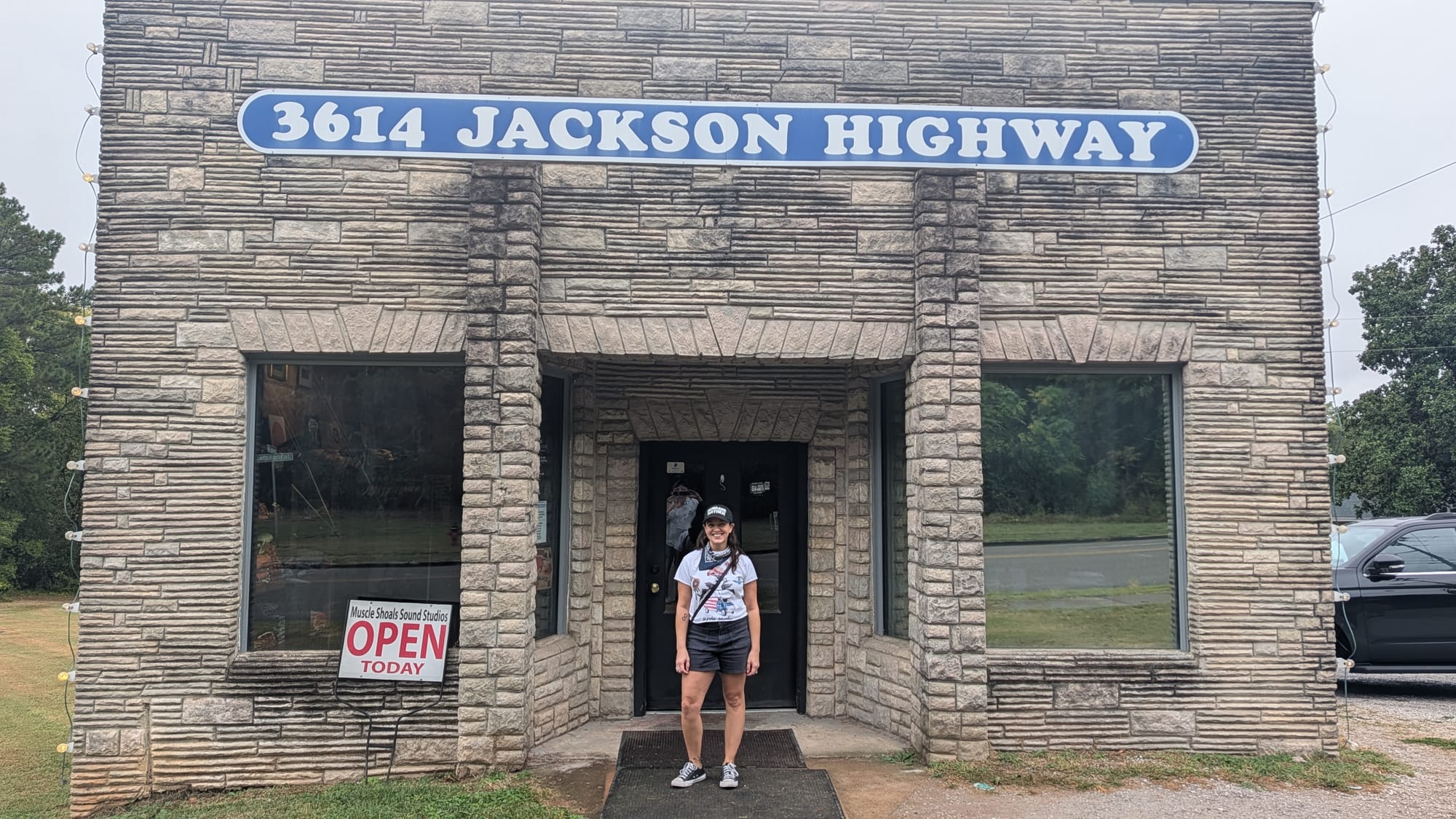
MSSS opened in 1969, after the Muscle Shoals Rhythm Section (aka The Swampers) parted ways with nearby FAME Studios, establishing the first recording studio owned by the session musicians who played there. The inaugural artist to lay down an album at 3614 Jackson Highway was Cher, who subsequently named her album after the location and featured it on the cover. The sign that remains on the front of the building today echoes the layout and design of Cher's 3614 Jackson Highway cover.
 Nancy Einhart
When we pulled up on Oct. 3, about 40 people milled about outside, most of them wearing Jason Isbell or Drive-By Truckers T-shirts with enough sensible shoes to cast a Skechers commercial. I thought, there is no way all those people will fit into that tiny building, but we did, barely.
Our guides split the tour group in half, and we started in the basement, where the walls are lined with some of the 300-plus records recorded upstairs. Behind a wood-paneled wall is a perfectly preserved 1970s speakeasy, built when Colbert County was dry. Whoever insisted on the verisimilitude of a cigarette butt in the ashtray deserves a raise.
“To me, it was like seeing the Grand Canyon for the first time. You can't describe the feeling unless you've been there.”
Upstairs, a tour guide told stories of individual songs recorded in the studio, playing them one-by-one through a small Bluetooth speaker: “Kodachrome” by Paul Simon, “Take a Letter Maria” by R.B. Greaves, “Old Time Rock & Roll” by Bob Seger, and “Brown Sugar” by the Rolling Stones, which he deftly cut off before the vocals started.
I’d seen the Muscle Shoals documentary several times, so I wasn’t sure what more I would get out of the tour. Turns out, standing in the hallowed rooms where some of our greatest songs were recorded felt weighty. To quote a fan named Johnny Latimer who I met outside of ShoalsFest, “To me, it was like seeing the Grand Canyon for the first time. You can't describe the feeling unless you've been there.”
Sitting Down at ShoalsFest
I spotted Johnny walking into ShoalsFest. He was hard to miss, due to the fact that he was a large man carrying a large wooden dining chair, like you might find at your grandparents’ house, rather than the foldable camping chairs most guests toted. “I've made a career out of folding them things up, just crumpling them up,” he said.
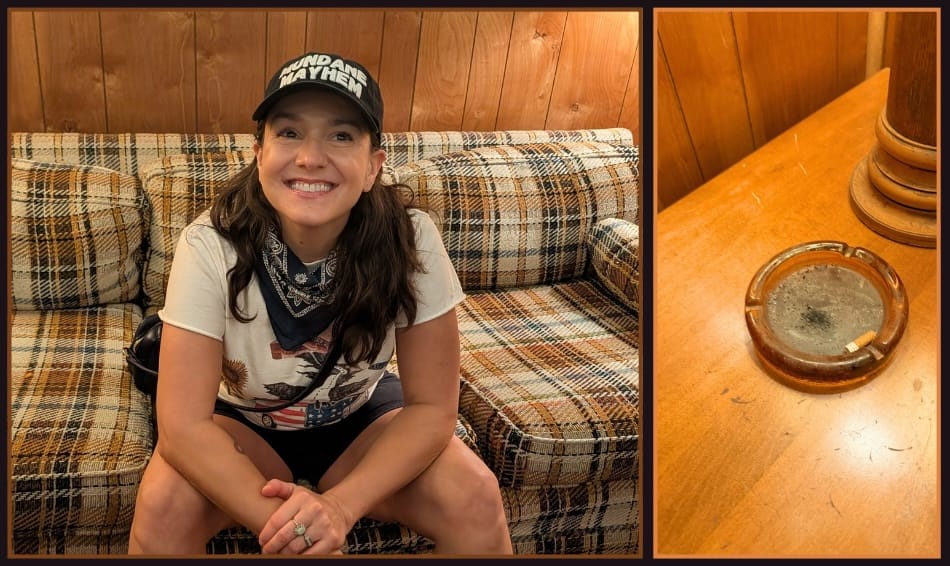
Unsurprisingly, Johnny wasn’t allowed inside the festival with his wooden furniture, so while his friend went to get another chair, we got to talking. He had traveled from Camden, TN, and while it was his first time at ShoalsFest, Johnny has deep roots in this part of Alabama. In fact, he could be the subject of a Drive-By Truckers song.
 Nancy Einhart
He worked for Tennessee Valley Authority for 42 years, he played music his whole life, and he’s a second-generation Southern liberal. Twice, he prefaced what he was about to say like it was a scandal: first, to confess that he’s a University of Alabama fan (in my time away from the South, I forget how much people talk about SEC football) and later to admit that he agrees with Drive-By Truckers’ politics.
“These guys right here are our bag of tea,” he said. “What they believe in and their lyrics and stuff — brother, that's 100% us. I don't mind saying that, even down here in the deep South. My family has fought that for years. When I was a small child, my mom and dad would leave me with my grandparents, and they would go to Nashville when they was having those sit-ins. My mom and dad got sprayed by firehoses because that's how bad it was then.”
He continued: “Well, y'all, by God, history repeats itself. When you vote for the Gestapo, when you put Hitler in office, this is what you get. I'm never going back on that. And if people don't admit that, they're just racist.”
The Duality of the Shoals Thing
When I attend DBT, Jason Isbell, and other Americana-adjacent concerts in New York City, the crowds present a little bro-y and performative of Southern culture. The fans at ShoalsFest felt special: a self-selected group of locals and superfans with a deep passion for these musicians and their politics. Thousands of people who understand that “the duality of the Southern thing” includes equal parts dark shame and deep pride.
Among DBT fans, you could find a thousand different reasons for excitement about the Isbell reunion. Some of us looked forward to little things like hearing Patterson’s vocal harmony on “Outfit” or Jason’s harmony on “My Sweet Anette.” Other fans hoped Jason would sing a neglected DBT song like “Daylight.” Jessica Xinos was happy just to enjoy Jason’s guitar playing live with the band again.
But I haven’t met anyone who wishes Isbell and DBT would get back together. With the current lineup, including Jay Gonzalez and Matt Patton, the band is a triumph. Why try to recapture magic from 20 years ago?
“It wouldn’t be the same,” Jessica said. “This makes sense. But for them to record together, it’s just not practical. It’s just how it’s supposed to be.”
 Nancy Einhart
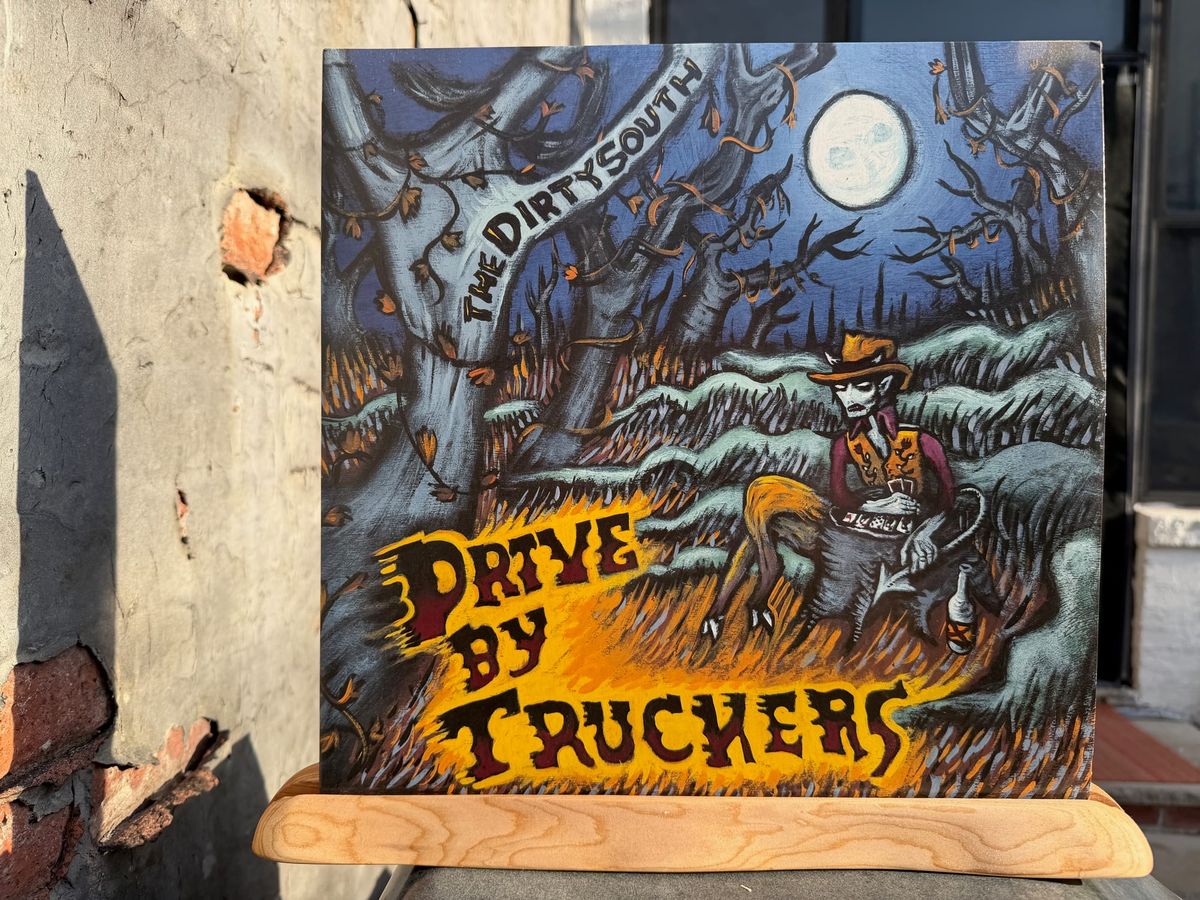
Getting to McFarland Park had been kind of a drag, but when Jason Isbell and DBT walked onto stage around dusk, I shot up like I’d been injected with locally grown dopamine. Not because it felt like getting the band back together but because I was witnessing something that might never again happen in my lifetime. I suspect Jason was saving his voice for later, so his vocal harmonies weren’t very prominent, though having his guitar-playing in the mix did sound pretty fucking awesome. (To ShoalsFest’s credit, the sound on both days was some of the best I’ve experienced at a festival.)
“These guys right here are our bag of tea. What they believe in and their lyrics and stuff — brother, that's 100% us.”
From Patterson Hood’s “The Deeper In” a capella to Mike Cooley’s solo spotlight moment on “Loaded Gun in the Closet,” they played the entirety of Decoration Day as promised, plus “A World of Hurt” as an encore.
But for me, the most meaningful moment was the surprise Cooley/Isbell double feature that came right after “Hell No I Ain’t Happy.” On the banks of the Tennessee River, with the goddamn Wilson Dam in the background, I got to hear “Uncle Frank” and “TVA” back-to-back.
Everything I know about the Tennessee Valley Authority, I learned from Drive-By Truckers songs. Isbell’s “TVA” tackles the positive economic impact of the Wilson Dam, while Mike Cooley’s “Uncle Frank” picks up later, when the TVA became a force of oppression. When Isbell sang the lyric “gave power to most of the South,” a woman standing next to us cheered like her very existence depended on the TVA — because it probably did.
 Nancy Einhart

When Isbell finished singing “TVA,” Patterson made a joke about how they were supposed to be playing an album and could someone flip the record over? At once, the experience felt familiar, like being in a friend’s living room, and profound, like seeing the Grand Canyon.
The music of Drive-By Truckers reverberating over the Tennessee River felt as emblematic of the Shoals as meat-and-three lunches, the ‘70s speakeasy ashtray, or the Wilson Dam. And when the band hit us with “A World of Hurt” as their encore, we were reminded not to ask “why this place?” but instead to take a deep breath and throw ourselves into it with everything we’ve got.