New West's Matt Etgen: "Those Were Epic, Barn-Burning Shows"
The Director of Art & Production at New West Records talks about the early aughts in Athens, the origin story of the Heathens Live at Flicker Bar album, and more.

This post is free to read, but if you enjoy Mundane Mayhem, forward this email to your friends and please consider becoming a paid subscriber or leaving me a tip!
In honor of Mundane Mayhem’s anniversary, I’m hosting a giveaway (more on how to enter below), and the prize is THREE of my favorite Drive-By Truckers albums on vinyl (a total of 8 LPs!). Anyone who subscribes to Mundane Mayhem — including free and paid members — is eligible to win.
To enter to win, all you have to do is comment on a post on Mundane-Mayhem.com between Oct. 9, and Monday, Nov. 9, at 11 p.m. EST. The giveaway prize includes: The Definitive Decoration Day (4 LPs), Live at Plan 9 (2 LPs), and Drive-By Truckers Live From Austin, TX (2 LPs). I’d like to thank New West Records (and especially Matt Etgen) for supplying two of the records included in this prize.
An Interview With New West Records' Matt Etgen
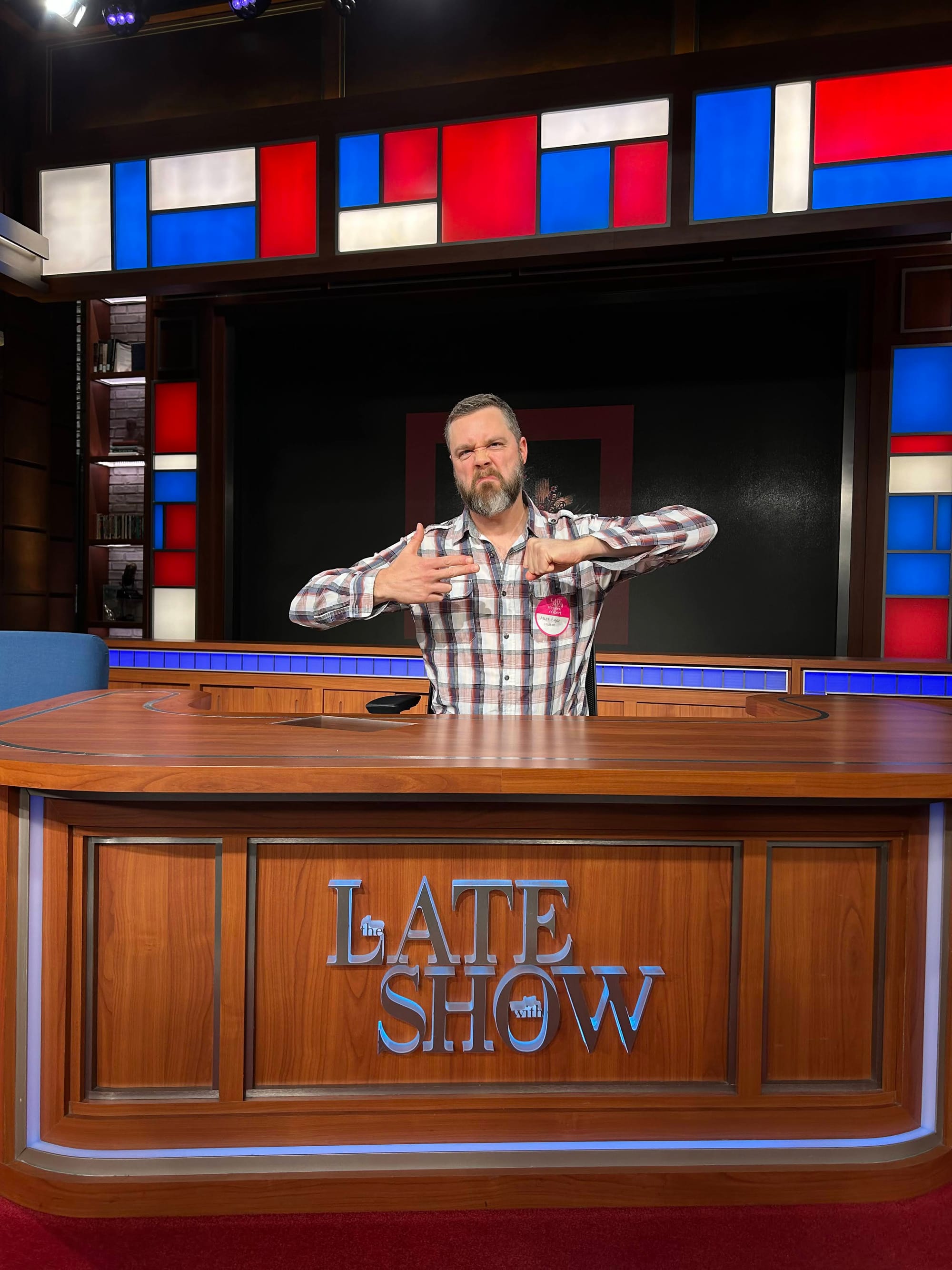
You might think that working for Drive-By Truckers’ label, New West Records, would be a cool job — and you would be correct. “I love it,” says Matt Etgen. “I love it every day.” As the Director of Art & Production at New West, Matt touches almost every step of making a record after the tracks are laid down.
Without Matt — and his colleague Kevin Cregge, who handles the heavy lifting of audio ingestion — we probably wouldn’t have The Definitive Decoration Day box set, and we definitely wouldn’t have the included live album, Heathens Live at Flicker Bar. In our interview, Matt explains how he made that concert recording a reality, and it’s a great story.
Matt, who lives in Athens, has worked at New West for nearly 15 years, but his DBT fandom goes back decades; he used to drive the band’s gear truck. Keep reading to learn how Matt Etgen discovered DBT, the origin story of the Heathens Live at Flicker Bar album, everything that goes into making a record, and more.
Did you always have a desire to work in the music business?
No. I had no idea it was even possible. When I was reading Spin and Rolling Stone magazines as a kid, I always pictured the music business being in some skyscraper in New York, where guys in business suits were assembling boy bands because of their voices and looks and dance moves. I didn't know about the myriad sub-professions within it.
 Nancy Einhart
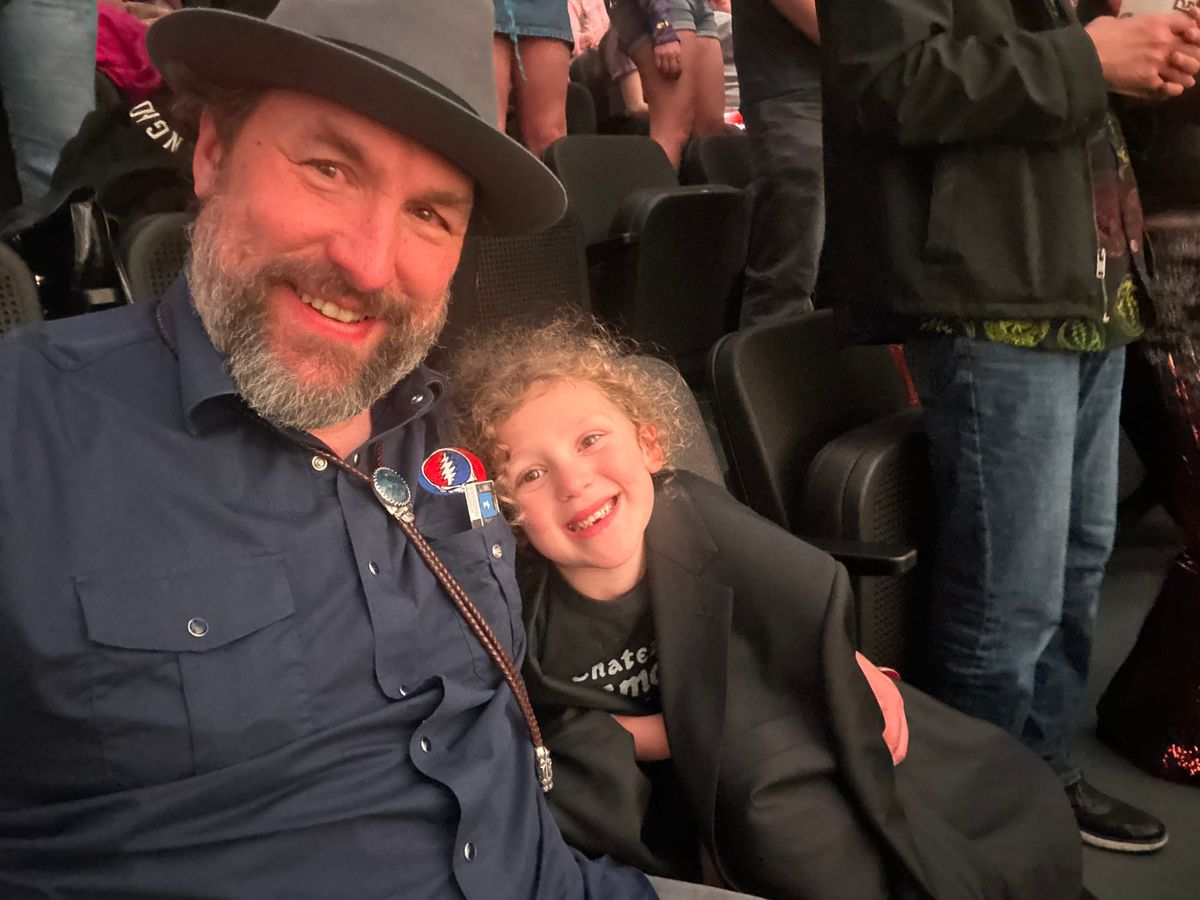
I grew up in Christiansburg, Virginia, which is in Montgomery County. It's the same county that Virginia Tech is based in, which is where I got my degree. The only thing that made sense to me as a kid was music. I was into sports, but as soon as I got into music, I just hung that up and said, "I'm going to learn guitar." Music became my obsession. At the time, CDs were like 15 bucks, and my allowance was maybe five bucks a week, so I'd get one CD every three weeks and just obsess over it.
I got a job as soon as I turned 16 because I just wanted some money. I worked fast food. But I'd been hanging around this record store in Blacksburg called Crossroads, especially on Tuesdays, which used to be when albums were released before everything moved to Fridays. Sometimes we'd sneak down there at midnight on Mondays for midnight sales, where they'd let you buy the record at 12:01.
"These songs weren't road worn. I think that they were still thinking and living in them and that accounts for some of the specialness of that recording."
I hung around enough that I made an impression on some of the staff. I think I was 17. They said, "Hey, we've got a job opening for a salesperson." I went down there, and they pulled out 30 CDs and said, "What's this? What's this? Which genre is this?" I passed their test, they hired me, and then a bunch of college kids helped corrupt me one piece at a time. I worked at the record store from '97 to 2002, all the way through college, until I moved to Georgia. And I did a couple semesters on WUVT college radio too.
 Nancy Einhart
What were some of your early band crushes when you were a teen?
The first massive obsession I had was Pearl Jam. I really remember the day that I heard it, it felt like something changed. I don't know how old I was, 11 or 12. It was like one day we're standing around the boys' room, and some kid's got Vanilla Ice on his Walkman, and a week later it's Nirvana, and Vanilla Ice is gone. I really obsessed over Pearl Jam at the time and Tool, Blues Traveler, Black Crows, Metallica, Pantera, Nirvana, stuff like that.
Do you remember how and when you discovered Drive-By Truckers as a fan?
Yep, absolutely. I was an Appalachian Studies minor in college. I wanted to know more about where I came from. I had a professor who I really loved, named Steve Mooney. When he came into class, he would almost always either talk to us about bands or play us bands. We would analyze Steve Earle songs — I remember specifically analyzing "Copperhead Road" and then Dwight Yoakam's "Readin', Rightin', Rt. 23," about the outmigration of folks to cities to get jobs. I remember him playing us “Nine Bullets." Immediately, I was like, "Oh, this is rad!” Working down at the record store, I was able to check out Pizza Deliverance and Gangstabilly.
"Those were just epic, barn-burning shows."
As soon as I moved to Athens, I remember buying Southern Rock Opera and obsessing over that. My friend Matt DeFilippis was doing sound at that time, so he would bring me back the recordings of what he felt like were great shows. Because I was hanging around with Matt, I was getting dragged around all these places, like Patterson doing a little solo set in someone’s backyard. I got to see all those great 40 Watt and Georgia Theater shows at the time with Isbell. The 40 Watt show that New West put out on DVD, I was definitely at that. Those were just epic, barn-burning shows.
Tell me a little bit about how you ended up working for the Truckers.
I had known Matt DeFilippis (aka The Mattador) for a while. He had been their front of house and tour manager for a long time, and he and I went back to my days in Virginia. He called me up and he said, "we're opening up an Athens office, and it's where we're going to store our gear and our merch. If you would like to come on and run our merch operation, I'd love to have somebody in here." Craig Lieske was still selling the merch at shows, but they wanted someone to come in and help with designs and inventory and projections and all that stuff. I didn't have any experience in it, but I wanted to work for the Truckers, so I jumped right on that.
"It was like one day we're standing around the boys' room, and some kid's got Vanilla Ice on his Walkman, and a week later it's Nirvana, and Vanilla Ice is gone."
I did two years with the Truckers, and I lucked out and went on a handful of tours with them. I drove the gear truck for a U.S. tour. At the time, they were pulling a 26-foot truck because Brad had that gigantic vertical drum that he got around the time of The Big To Do. In 2010, I want to say, I got to do a really long European tour with them over Thanksgiving. It was the one that ended prematurely in Germany because Cooley ended up exhausted and dehydrated. Then the following year, I got to do another tour of the UK and Ireland and Scotland, which was awesome.
 Nancy Einhart

After they toured really hard behind Go-Go Boots, all signs indicated that they were gonna ease off the gas for a year. It was right at that time that my buddy Tommy at New West, who I had met through a lecture at the UGA Music Business Program, called me up. I guess I had made a good impression on him, probably because I was the oldest dude in the whole class. He said, "Hey, we've got an entry-level opening in our Athens office for somebody warehousing, fulfilling orders and whatnot. Would you like to do it?" I said, "Hell yeah, sign me up."
I'm sure that you wear a lot of hats, but what are the main duties in your job description at New West now?
Before a record ends up on the shelf, there's about six months worth of work that goes into it, and it all starts from the recording of the record. Sometimes we'll get rough mixes or demos, but as soon as it gets to the stage where we and/or the band is figuring out who's going to master, that's where I come in.
I have a partner on my production team named Kevin Cregge, who specializes in the audio ingestion. Almost all of our thought initially is about vinyl, because CD is still very easy to get done, so we really let vinyl guide things.
"Something about the story that he tells, the simplicity of the way it's told, and John Neff's touch on the pedal steel, there's just something magical about that song."
Once the masters are done, we get those in house, including the actual CD masters, the instrumentals — which are often required for syncs in a movie or a commercial — and sometimes we'll get all the Pro Tools stems and be able to archive those in the event that someone wants to remix it down the line. We'll get vinyl masters as well. That can either be the same engineer who is mastering for vinyl, so you’d end up with a WAV file for each side, or the mastering engineer might also cut lacquers in house.
Sometimes, we coordinate who's gonna cut the lacquer and then we coordinate who's gonna plate it. We'll decide which plant is gonna press the vinyl, based on if we're going to have the artists autograph it. If we have, say, a Canadian artist, it makes more sense to press it in Canada, because a lot more stock would stay there. Someone like Richard Thompson [whose Hippies, Thugs and Heroes just came out on New West], we pressed that in France because much of the stock was going to stay in the UK and Europe.
"All these songs were super fresh, and it was such a memorable show. It blew my mind. I think it blew everyone's mind who was there."
While we're working on the master ingestion and getting all that in place, we’re collecting label copy, typically from the band. That includes trying to get the exact spelling of the tracks, trying to get all the songwriters listed out, and — if they're splitting songwriting shares, — what percentages to each writer for royalties. We have to collect lyrics, whether or not they're printed in the package, because when it comes time to sync a record, people want to be able to see the lyrics before they put it into a movie or a commercial.
We are also contracting with a photographer. Whether or not photos are going to be in the package, photos are going to get done anyway for press and promo. We may be sourcing art. We may be commissioning new art or, in a lot of cases, artists will provide art. I meet artists wherever they're at. Occasionally we'll get lucky and we'll have an art director. They are not only going to take the photos, they are also going to commission the art, do custom fonts, custom logos. In that case, it's really nice because it's all under one person's vision.
 Nancy Einhart
By the time everything is starting to get manufactured, I'm working on where it's all going to ship out, coordinating who's going to autograph what. We do multiple variants for almost every vinyl record at this point. I parlay with the sales team to figure out how many and where they're all going. We've only got 14 or 15 people, so everyone wears a couple hats.
What a cool job.
I love it. I love it every day.
Tell me a little bit about your role in creating The Definitive Decoration Day box set and the Flicker bar recording.
Five or six years ago, we negotiated with the band to do a deluxe Dirty South and a deluxe Decoration Day. We didn't know exactly what was going to make them deluxe, so that's why The Dirty South ended up really different than Decoration Day. And, of course, we lucked out and got Southern Rock Opera in the middle.
Decoration Day was difficult because, unlike the Dirty South — which Patterson wanted to update, wanted to remix some things, wanted to add in and resequence some of the tracks — he always felt like Decoration Day was just the way he wanted.
"We were really scratching our heads, saying, 'OK, how can we really make this one deluxe if we're not going to change anything?'"
So we were really scratching our heads, saying, "OK, how can we really make this one deluxe if we're not going to change anything?'" We can remaster it, and that gives you something to say, but remasters aren't always better than the originals. There was not a lot of bonus material that was recorded.
I super lucked out because I moved to Athens in June 2002, and all of a sudden it's AthFest the first weekend that I'm here. I was just riding Matt DeFlippis's coattails, following him around town. The Truckers had done their award show, where they won for Southern Rock Opera, at the Morton Theatre, and then they were going to play the main stage. We're walking along, and we see that they're going to be playing Flicker.
 Nancy Einhart
It wasn't advertised. It wasn't in the Flagpole. I searched all over. I even consulted some people who have archived 50 years worth of Athens flyers, and there was no mention whatsoever of this show ever happening. I don't think there were any advance tickets sold to it. I think that we just walked up to the door and paid the $5 and got the ticket stub right there.
Flicker was just this little bitty room, especially at the time. They mostly showed cult films; they didn't do a lot of music. Maybe 50 people. I think the band just decided, we're having such a good time celebrating our victory over at Morton, let's go in here and do a real a stripped-down show. According to Patterson, they had just finished tracking Decoration Day. You know, because those guys are multitasking all the time. If they're in Athens, they're gonna be recording something. I think they had just finished it up the previous week, so all these songs were super fresh, and it was such a memorable show. It blew my mind. I think it blew everyone's mind who was there.
And you tracked down the recording of that show. Can you tell me how you found it?
I'd had my ticket stub for years. I have an album of ticket stubs, and it's always been one of my favorite ones. When it occurred to me that we didn’t have any bonus material for this record, I wondered if there's a recording of that show, and if it would prove my memory that it was as good as I remember it being.
"It wasn't advertised. It wasn't in the Flagpole. I even consulted some people who have archived 50 years worth of Athens flyers, and there was no mention whatsoever of this show ever happening."
I knew a couple of the tapers in town, so I hit up Sloan Simpson first. He says he wasn’t taping back then but he thinks Chris Penn was. So I hit up Chris, and he says, "Yeah, I recorded it. Let me see if I can dig it up." Within an hour, he had DAT tapes of that and the AthFest main stage and the Morton Theater performances.
It was a single source mic, so it wasn't a board recording. But the audience was so quiet, especially in between songs, and I think that was the reverence for what we all knew we were seeing at the time. We knew that we were seeing something really special. I don't think any of us knew that we were seeing them play a handful of these tracks for the first time ever in front of a crowd. The recording turned out great. We did a quick digitization and shared it with Patterson and David [Barbe], and they both said, "Man, I think we can really work with this."
If The Definitive Decoration Day was going to be our last of the three DBT reissues, I knew I wanted Stephen Deusner to contribute because of his serious writing chops and expertise as DBT's unofficial biographer, having already published a well-received bio on the band.
 Nancy Einhart
As soon as we had the Flicker recording in hand, despite my own superstitions about somehow jinxing the project, I shared it with Stephen to gauge if he concurred with me that this was a special historic document with vastly more gravity than other bootlegs circulating. I was pleased by his response and enthusiasm for the project. He came on board immediately and the rest, as they say, is history.
As someone who was not there, it really does capture that intimacy. Like it feels like you're in on the secret, which is really cool.
Thank you. Yeah, Patterson at one point in time said he thought it was the holy grail of Trucker shows. Just performance and energy and how loose it was. In that Isbell documentary on HBO, he talked about not letting his band members get to know a song too well before they recorded it, because he felt like if it was still a novel song to them that they would be more in the moment playing it. I think that's what made this so great. These songs weren't road worn and they weren't fully memorized at the time. I think that they were still thinking and living in them, and I think that accounts for some of the specialness of that recording.
What DBT song do you think you've listened to more than any other, and why?
“The Deeper In.” I'm not sure it's one that comes up very often because it's an unusual song structure. I don't know, man. Something about the story that he tells, the simplicity of the way it's told, and John Neff's touch on the pedal steel, there's just something magical about that song. Of all songs, there's something about that one that has always sat with me. It always kind of gives me chills when I hear it.
Same. That's actually the first Drive-By Truckers song I ever heard, because I went out and bought Decoration Day and put it in the CD player.
And it's right there at the front of the album. At that point, I was so resistant to streaming — or I guess at that point it was Napster — having worked at the record store. At the dorms at Virginia Tech, there's these kids just filling up tower computers with all the files they were scooping in. To this day, I want to put a CD in or a record on, and I want to listen to it all the way through. I want to know what that artist was going through.
Are there any recent records that you've really loved that you want to recommend to other Drive-By Truckers fans?
If I'm trying to cater it to what I imagine Trucker fans listen to, that's tough because I like to think they're all intellectual people who have lots of varied interests. I'm just going to say this one because Jason Thrasher, a local photographer who's been in their orbit for a lot of years, he tipped me off to this guy somewhat recently.
He's sometimes referred to as Benjamin Smoke, and he also has an alias called Opal Foxx. There's a documentary about him that us distributed by Discord by Ian MacKaye. He lived in Cabbagetown, Atlanta, I think in the '80s and '90s. He was queer, he also performed in drag. He's got this voice that's very much like Tom Waits, an incredible band, and in a lot of ways, he's kind of been forgotten. But as Jason said, he's as worthy of being as remembered as Vic Chestnut.
He's got a couple records on Spotify; the one I’d recommend is the Opal Foxx Quartet, a record called The Love That Won't Shut Up, and it's just breathtaking. I would love to play a part in somehow reissuing those someday. I don't know what the status is, but if I could play any part in bringing this guy's name to more people, that's what I would do.